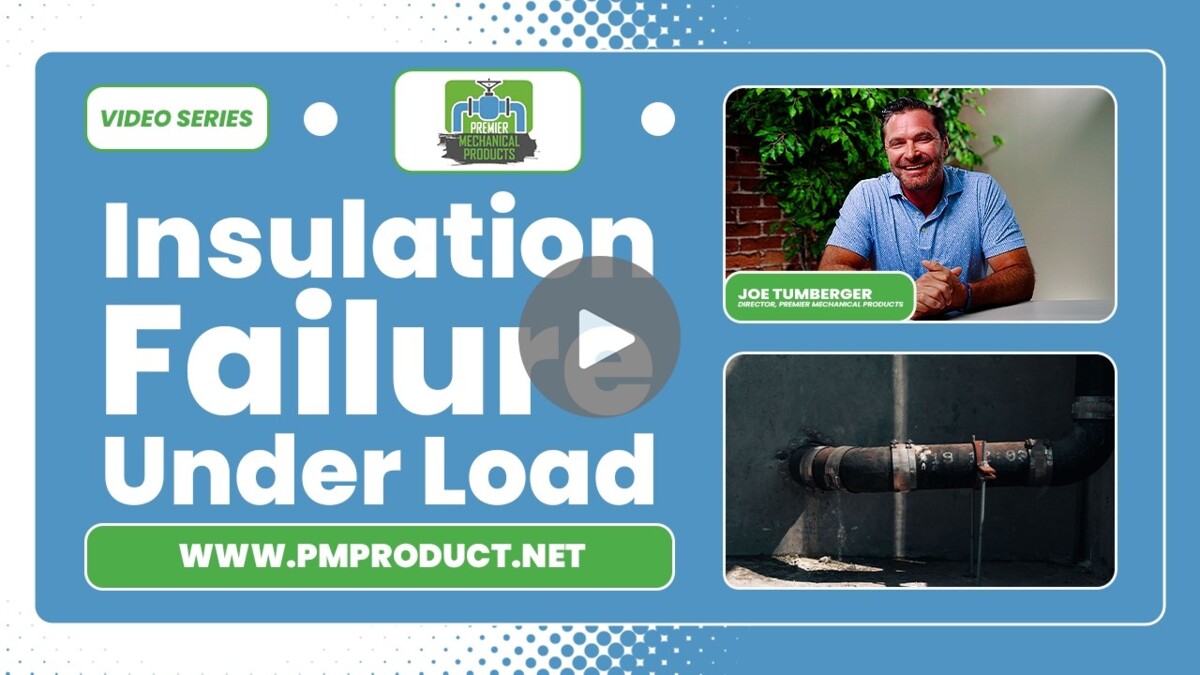
Pipe support failures rarely start at the support itself. They start at the insulation around it. A crew gets the pipe hung, the hanger set, and the insulation close enough, and then the vapor barrier opens at the joint, and the line begins to sweat. Preventing that takes two things: the right choice from the available types of pipe supports, and a proper seal where the insulation meets it. That choice starts with pipe size.
The Main Types of Pipe Supports and When We Use Them
Pipe size drives almost every decision on the job. It determines how we lift the line, what carries the load, and how thick the insulation needs to be at the support point.
Types of Pipe Supports for Lighter Piping
On lines up to three or four inches, we lift the pipe by hand at the spot where the clevis hanger or stand sits. Then we wrap a rigid foam insert around the pipe at that point.
The insert carries the load so the surrounding insulation does not have to. When we size it correctly to the insulation thickness, the install goes fast and clean.
Blocks and Tum-Tum Systems for Larger Pipe
At sixteen inches and above, the pipe is too heavy to lift by hand. Our crews raise the line with floor jacks or bottle jacks, lifting it to whatever height the insulation thickness for that support requires.
From there, we either wrap the insert or set a block or dowel underneath the load point. On a block or Tum-Tum system, we adhere the rest of the system insulation directly to that block. Only then do we lower the pipe back down off the jacks.
Need expert help selecting, installing, and sealing the right supports for your piping system? Contact Premier Mechanical Products LLC for a free consultation.
Pro Tip: Confirm your insulation thickness before you choose a support. The height of the block or insert has to match the system, not the other way around.
Common Mistakes that Cause Pipe Support Systems to Fail
The support carries the weight. The seal protects everything else. Two failures account for most of the problems we get called out to fix, and both happen at the joint.
Leaving the Vapor Barrier Unsealed
On a common pipe support that uses pipe covering with rigid foam, the non-rigid insulation butts directly against the insert. If our crews do not seal the vapor barrier at that transition, moisture reaches the pipe, and the system starts to fail from the inside.
Weak Adhesion at Block Joints
The biggest mistake with a Tum-Tum system is failing to bond the surrounding insulation to the block. Crews have to secure and seal that connection right at the joints. A loose joint brings down the whole system, no matter how well the rest of the line went in.
Key Takeaway: A correctly chosen support with a poorly sealed joint still fails. Treat the seal as part of the support, not as a finishing step.
Work with a Team that Gets the Details Right
Our crews install supports and insulation as one system, because that is the only way either one performs. We size inserts to the insulation, set blocks at true load points, and seal every joint before a line comes off the jacks. Call Premier Mechanical Products LLC today to schedule a quote and get expert guidance on the right types of pipe supports for your project.