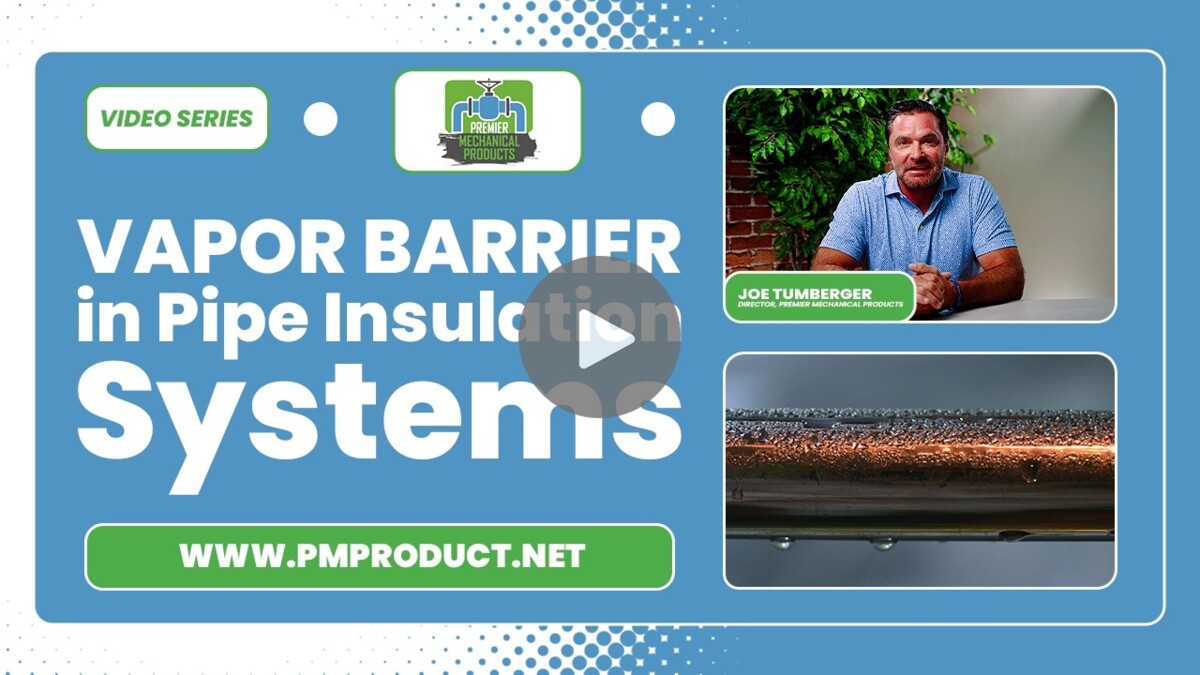
A common question on cold piping projects is whether chilled water lines need a vapor barrier or whether insulation alone is enough. A vapor barrier on chilled water pipes should be a requirement every time. Without one, moisture reaches the pipe and the system will not work as it should.
Cold pipes pull moisture from the surrounding air. Once that moisture gets through, the insulation starts to fail, and operating costs climb.
Why Every Cold System Needs a Vapor Barrier on Chilled Water Pipes
A cold piping system needs protection from the air around it. The vapor barrier provides that protection.
How Vapor Molecules Reach the Pipe
Air carries water vapor molecules. When those molecules travel through the insulation and touch a cold pipe surface, they turn into moisture. A vapor barrier blocks that path and keeps the molecules away from the pipe.
Without the barrier, the insulation on a chilled water line cannot do its job for long.
Why Engineers Always Specify One
We have never seen an engineer’s specification for a cold system that left out a vapor barrier. Engineers know the system will fail unless the installer seals every joint. A single open joint lets moisture in, so the barrier has to run continuously from end to end.
Pro Tip: Check every joint, seam, and fitting before you sign off on an installation. A vapor barrier is only as reliable as its weakest seal.
How Sealed Insulation Improves System Efficiency
A sealed barrier also affects how much energy your system uses.
A Better R-Value Means Lower Energy Use
When you seal the joints, the insulation holds its R-value. A higher R-value lets the system run at a lower energy level, which makes the entire setup more efficient.
Your equipment does less work to keep the water at the right temperature as it moves through the piping.
The Same Principle Applies to Hot Water Systems
Sealed insulation helps on the heating side as well. It keeps heat inside the pipe as water travels through the system. Your boiler or hot water heater runs less, and you pay less to keep the water hot.
Need expert help with chilled water pipe insulation? Contact Premier Mechanical Products LLC for a free consultation.
What Happens When You Skip the Vapor Barrier
A missing barrier or an unsealed joint creates problems that grow over time.
Condensation and Freezing Problems
Moisture that reaches a cold pipe forms condensation. In colder conditions, that moisture can also freeze. Both issues damage the insulation and weaken its ability to protect the system.
Skipping a Vapor Barrier on Chilled Water Pipes Raises Costs
Once the insulation loses its performance, the system has to work harder. Your energy bills rise month after month. Over time, the added cost of running the system far outweighs any money you save by skipping the barrier.
Key Takeaway: A vapor barrier protects the pipe, preserves the insulation’s R-value, and keeps your operating costs under control. It only works when you seal every joint.
Protect Your Chilled Water System From the Start
The simplest way to avoid future problems is to get the barrier right during installation.
Key Points to Remember
- Every cold piping system needs a vapor barrier.
- Seal every joint, or the system will fail.
- Sealed insulation holds its R-value and lowers energy use.
- Skipping the barrier leads to condensation, freezing, and higher costs.
Talk to Our Insulation Experts About Your Project
Premier Mechanical Products LLC can help you choose and install the right insulation for your piping system. Call us or request a quote online, and we will make sure your project has a fully sealed vapor barrier on chilled water pipes from day one.